Digitally delivered full plate living: associations with diet quality, body mass index, and participant-reported health measures among participants with paired assessments
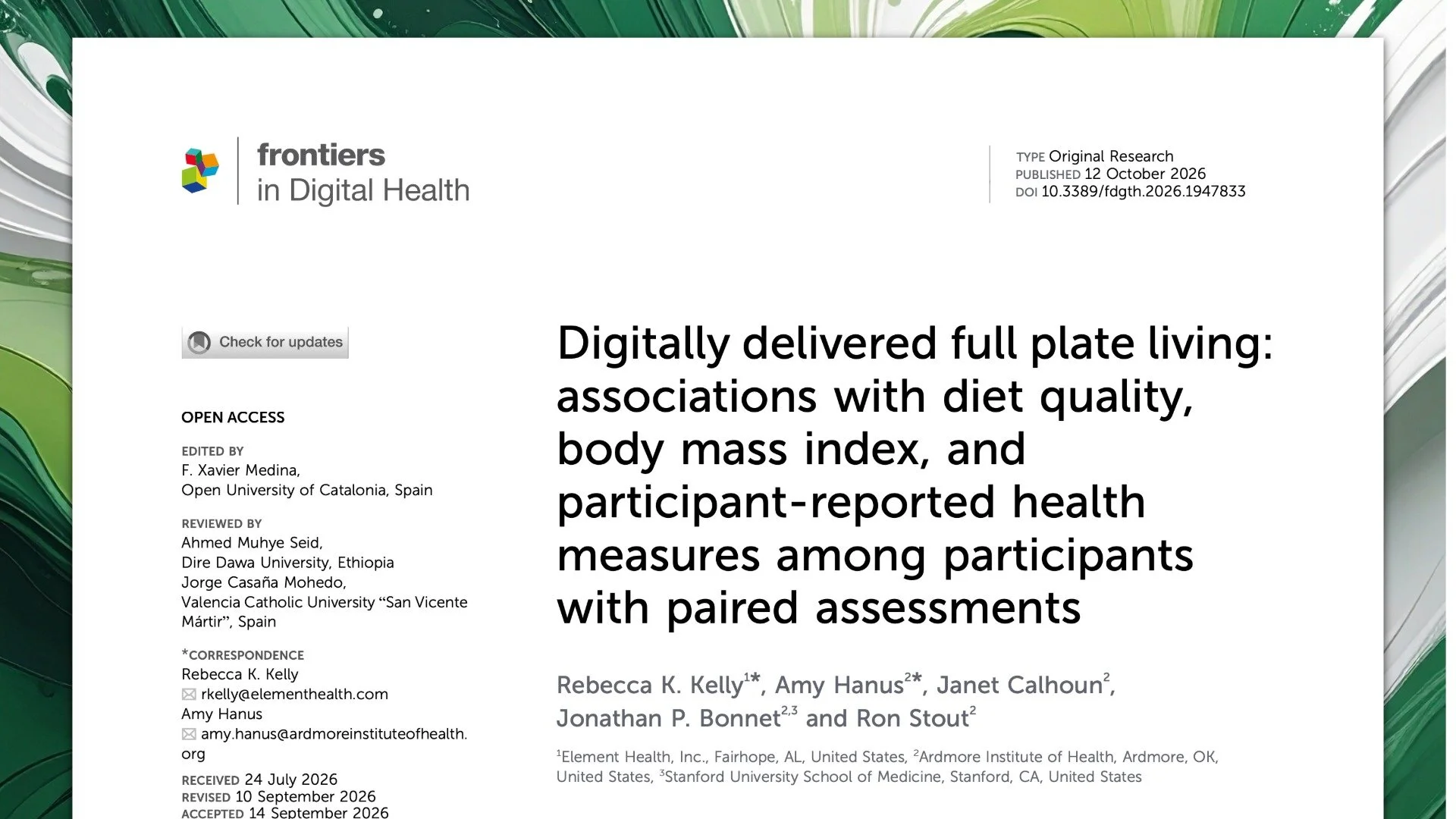
Ardmore Institute of Health (AIH) is delighted to share this article, authored by Rebecca Kelly and AIH staff, Digitally delivered full plate living: associations with diet quality, body mass index, and participant-reported health measures among participants with paired assessments.
Abstract
Introduction:
Nutrition counseling is often limited by time, staffing, and resources. Full Plate Living (FPL) is a free, self-guided digital nutrition program that encourages a whole food, plant predominant, fiber-rich eating pattern. This study examined baseline-to-follow-up changes in diet quality, body mass index (BMI), dietary fiber intake, and participant-reported health measures among adults with eligible paired Diet ID/FPL assessments.
Methods:
This secondary analysis used de-identified observational records from July 2023 through January 2026. Baseline was the first available record, and follow-up was the first subsequent record at least 60 days later. Baseline characteristics were compared between participants with and without eligible paired records. Within-participant changes were evaluated using paired analyses, with Bonferroni-adjusted sensitivity analyses for multiple outcomes. Regression analyses examined whether follow-up interval was associated with outcome change.
Results:
Among 4,359 participants with 7,077 records, 392 (9.0%) had eligible paired records. The paired-assessment cohort was predominantly female (87.5%), White (81.1%), mean age was 57.7 years. Compared with participants without eligible follow-up records, paired-assessment participants were older and had higher diet quality and dietary fiber intake and lower estimated energy intake. Among participants with paired data, Diet ID Quality Score increased from 7.20 to 7.91 (Cohen d=0.26), Healthy Eating Index-2015 increased from 73.87 to 80.24 (d=0.27), BMI decreased from 31.62 to 31.03 kg/m² (d=−0.17), and dietary fiber intake increased by 5.0 g/d (d=0.28). After Bonferroni adjustment, improvements in diet quality, healthy food choice confidence, weight-loss confidence, energy level, general health, dietary fiber intake, and food group measures remained significant, along with the modest BMI reduction; sleep duration category did not remain significant. Longer follow-up interval was weakly associated with smaller improvements in Healthy Eating Index-2015 and dietary fiber intake and was not associated with BMI change. DISCUSSION: Among participants with eligible paired assessments, baseline-to-follow-up improvements were observed in diet quality, dietary fiber intake, participant-reported health measures, food group measures, and BMI; effect sizes were small. These findings should be interpreted as exploratory repeated-observation changes rather than causal evidence of program effectiveness. These findings may guide evaluation of FPL as a no-cost digital nutrition resource for individuals, clinics, and communities.