Full Plate Living Evaluation and Case Series
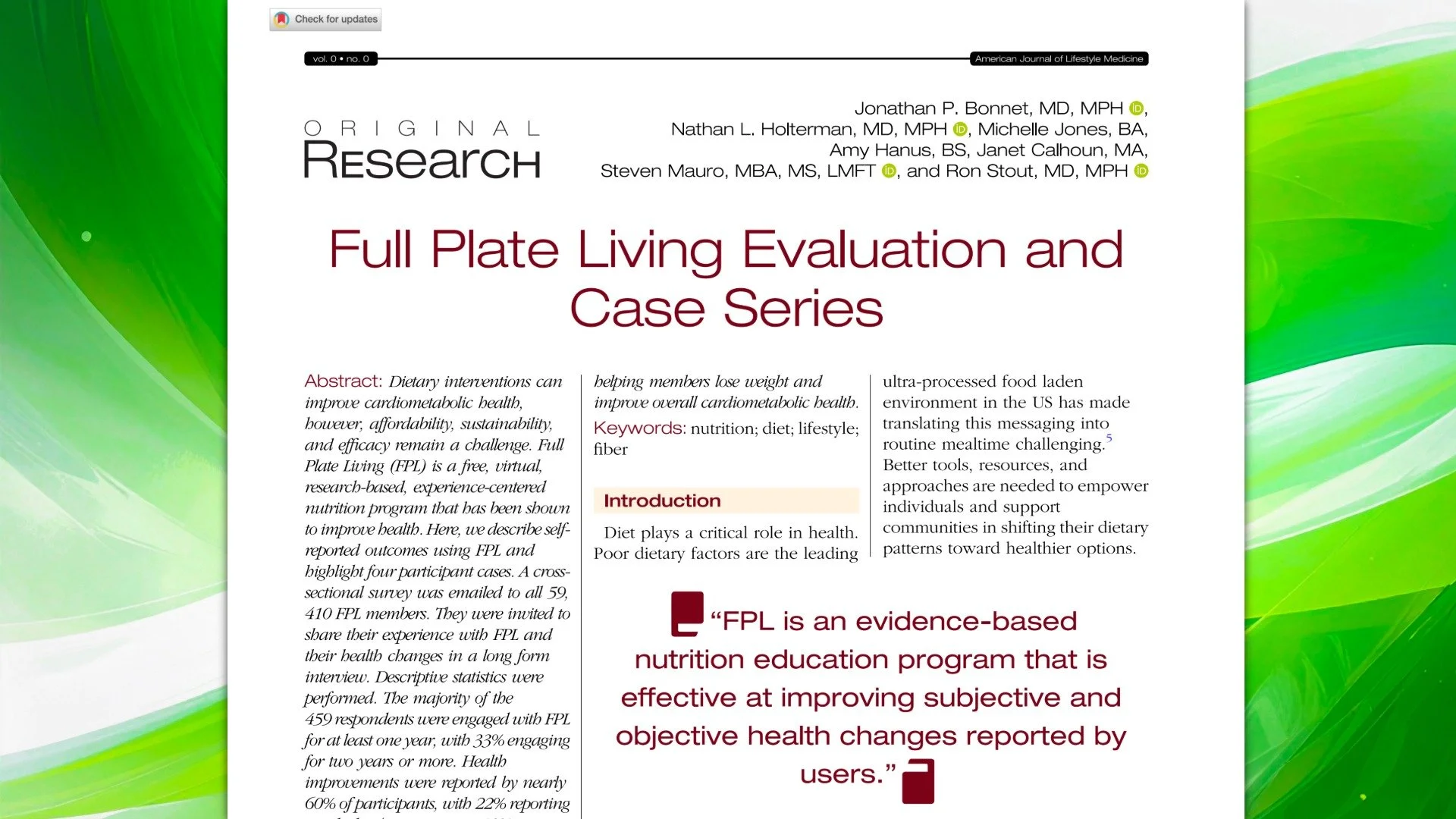
Ardmore Institute of Health is delighted to share a recent publication, Full Plate Living Evaluation and Case Series, highlighting Full Plate Living’s efficacy and impact.
Full Plate Living is a research-based, experience-centered nutrition program that helps people add more whole, unprocessed fiber foods to their meals. This article includes self-reported outcomes from Full Plate Living participants as well as four case studies.
Abstract
Dietary interventions can improve cardiometabolic health, however, affordability, sustainability, and efficacy remain a challenge. Full Plate Living (FPL) is a free, virtual, research-based, experience-centered nutrition program that has been shown to improve health. Here, we describe self-reported outcomes using FPL and highlight four participant cases. A cross-sectional survey was emailed to all 59,410 FPL members. They were invited to share their experience with FPL and their health changes in a long form interview. Descriptive statistics were performed. The majority of the 459 respondents were engaged with FPL for at least one year, with 33% engaging for two years or more. Health improvements were reported by nearly 60% of participants, with 22% reporting weight loss/maintenance, 13% increased energy, 9% better sleep, and 6% improved lab results. Four participants completed interviews as case studies and demonstrated an average weight loss of 33 pounds, a 3.3% drop in hemoglobin A1C, and reductions in liver function tests. Total cholesterol, LDL-cholesterol, and triglycerides decreased on average by 55, 38, and 165 mg/dL, respectively. We conclude that FPL is an evidence-based nutrition education program that is sustainable, adaptable, and effective in helping members lose weight and improve overall cardiometabolic health.