Integrating Lifestyle and Obesity Medicine into Residency Education: A Clinical-Educational Model in an Underserved Setting
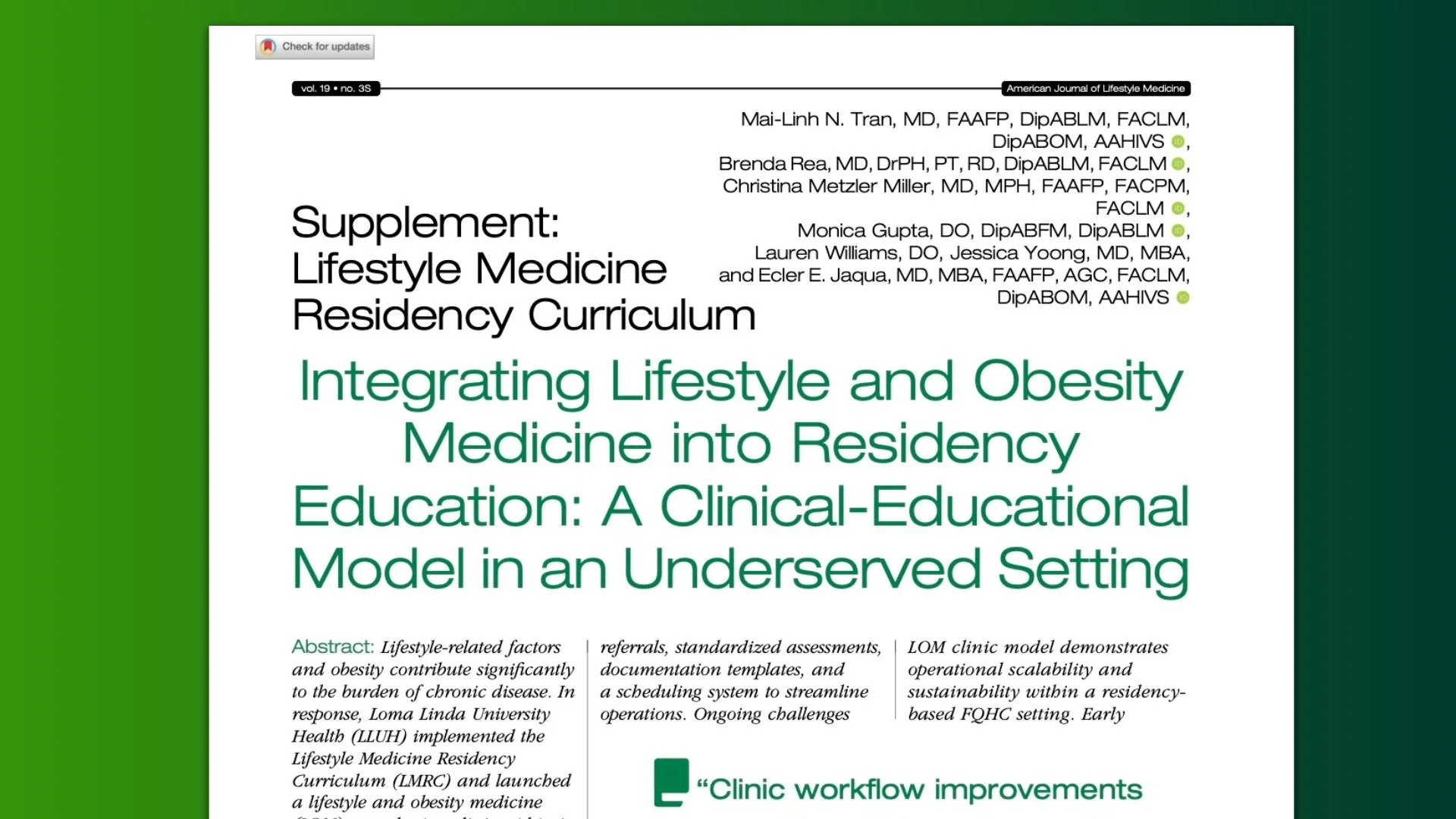
This new publication highlights the Loma Linda University Health Lifestyle and Obesity Medicine clinic model, which demonstrates operational scalability and sustainability within a residency-based FQHC setting. Ardmore Institute of Health provided grant funding to support the Lifestyle Medicine Residency Curriculum (LMRC).
Abstract
Lifestyle-related factors and obesity contribute significantly to the burden of chronic disease. In response, Loma Linda University Health (LLUH) implemented the Lifestyle Medicine Residency Curriculum (LMRC) and launched a lifestyle and obesity medicine (LOM) consultation clinic within its family medicine (FM) residency program. The LOM clinic was embedded within a Federally Qualified Health Center (FQHC) affiliated with LLUH. It expanded from a biweekly half-day clinic to a weekly half-day model with 21 appointment slots per session to achieve financial sustainability. Key stakeholders were engaged across the FQHC and LLUH obesity medicine teams. In June 2024, senior residents were surveyed to evaluate educational impact and perceived value of the clinic experience. Quality improvement efforts established electronic referrals, standardized assessments, documentation templates, and a scheduling system to streamline operations. Ongoing challenges included non-unified nutrition messaging, social and psychological barriers to behavior change, and systems-level constraints related to staffing, education, space, and access. The LOM clinic model demonstrates operational scalability and sustainability within a residency-based FQHC setting. Early outcomes suggest it enhances resident engagement, supports patient-centered chronic disease management, and may serve as a replicable framework for other institutions integrating lifestyle medicine into primary care training and underserved settings.