Parent Perspectives on the Interactive Role of Charitable and Federal Nutrition Assistance
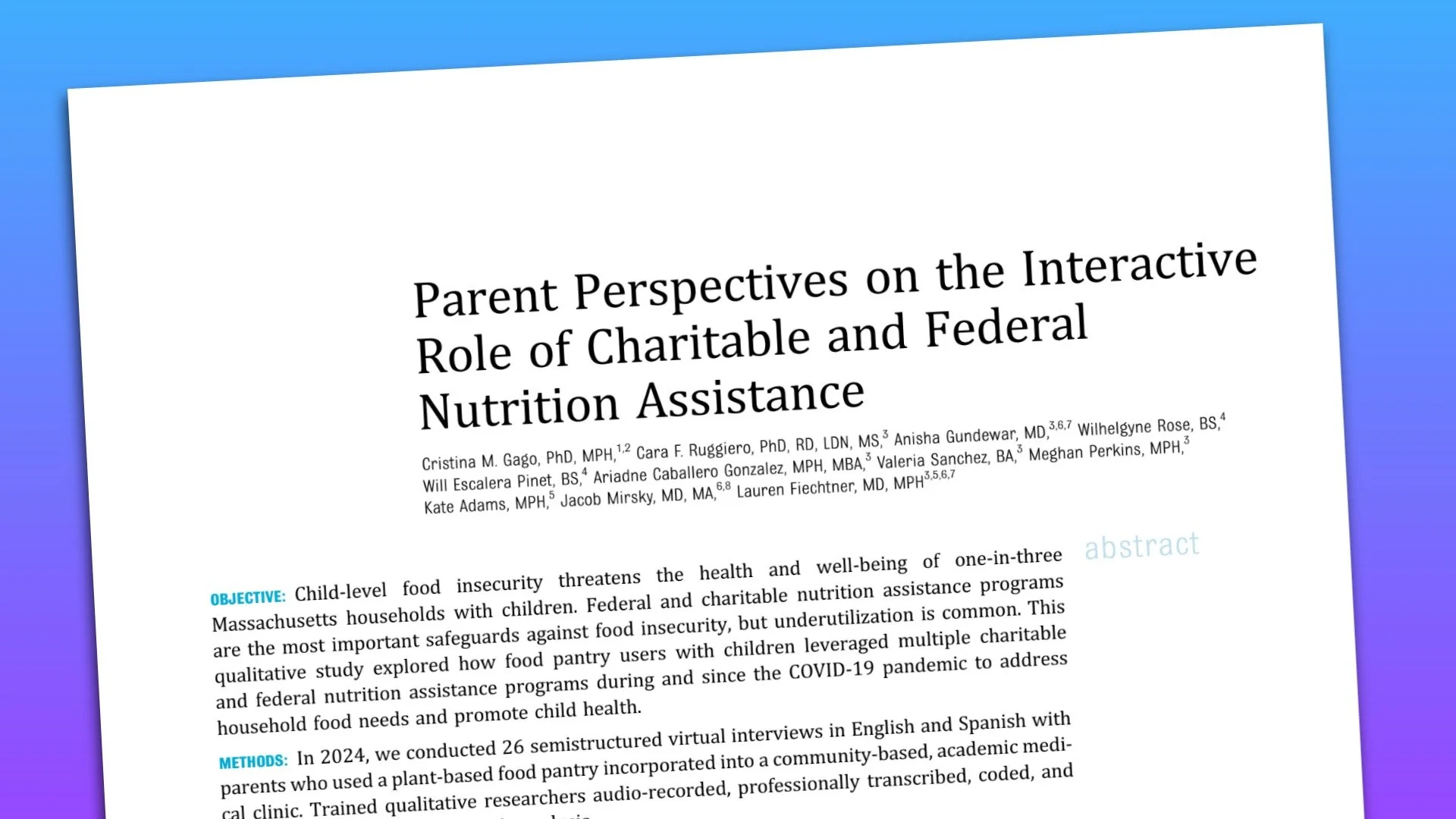
With grant support from Ardmore Institute of Health, Massachusetts General Hospital published Parent Perspectives on the Interactive Role of Charitable and Federal Nutrition Assistance.
Abstract
Objective: Child-level food insecurity threatens the health and well-being of one-in-three Massachusetts households with children. Federal and charitable nutrition assistance programs are the most important safeguards against food insecurity, but underutilization is common. This qualitative study explored how food pantry users with children leveraged multiple charitable and federal nutrition assistance programs during and since the COVID-19 pandemic to address household food needs and promote child health.
Methods: In 2024, we conducted 26 semistructured virtual interviews in English and Spanish with parents who used a plant-based food pantry incorporated into a community-based, academic medical clinic. Trained qualitative researchers audio-recorded, professionally transcribed, coded, and analyzed transcripts via thematic analysis.
Results: Resources offered through federal and charitable nutrition assistance programs return agency to parents over child diet decisions amidst destabilizing environmental change (eg, inflation and grocery shortages). However, participation in multiple programs is necessary to meet household food needs, and coordination across programs incurs learning, adherence, and psychological costs. Although pandemic-era outreach and policy change temporarily improved multibenefit program enrollment and related diet outcomes for some, many did not benefit from federal efforts, given immigration or income restrictions. Further, the rollback of these reforms threatened food security and the child's diet. Ultimately, charitable food systems filled critical gaps that were unmet by federal programs due to eligibility shortfalls and rollbacks.
Conclusions: The experiences of pantry users with children underscore the need to reinvest in charitable and federal nutrition assistance programs, broaden the eligibility criteria, and alleviate the administrative burden associated with federal nutrition program access.