Public Perception of Lifestyle Medicine and the Integration of Behavioral Health: A Nationally Representative Survey of U.S. Adults 18+
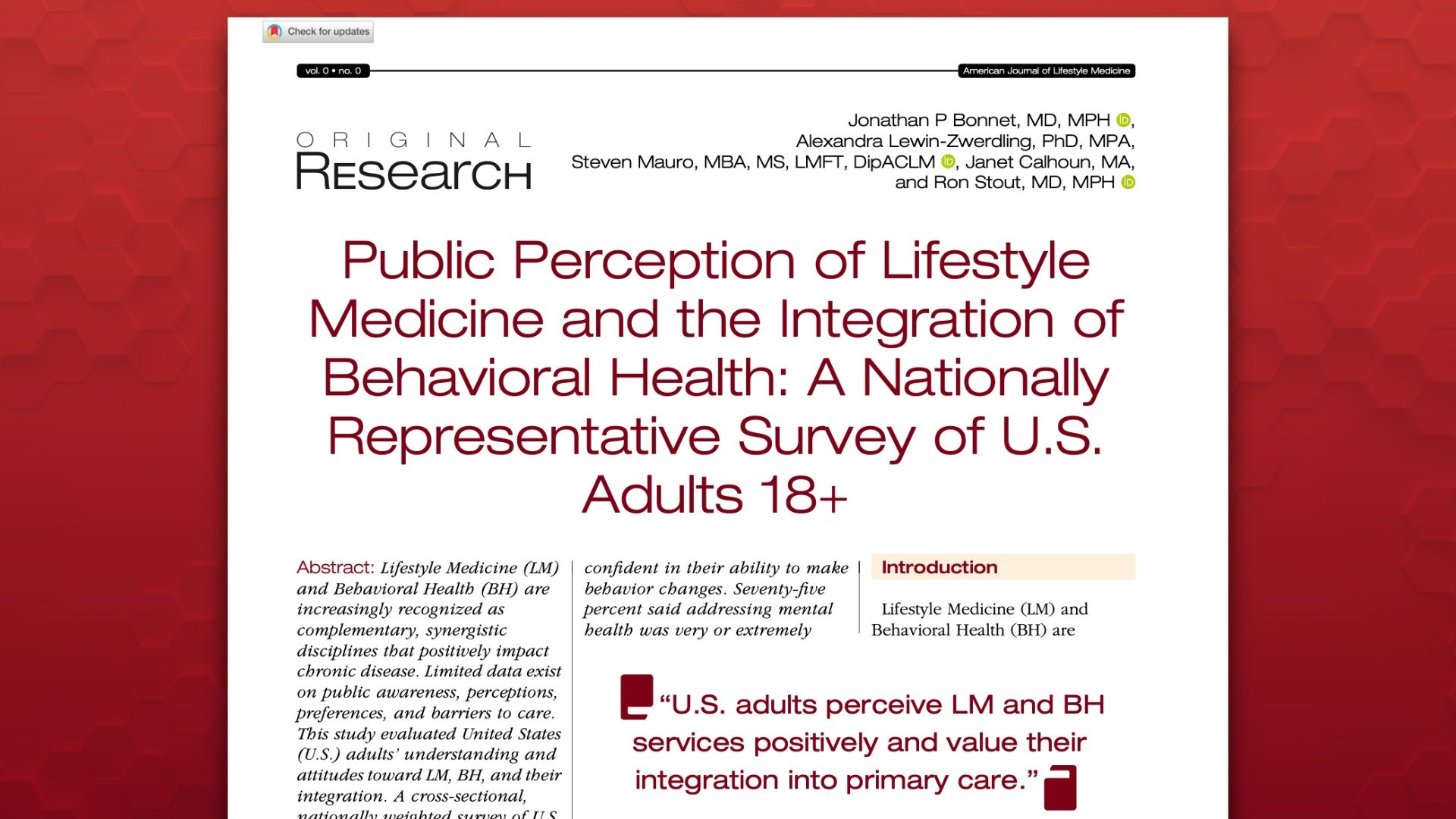
Ardmore Institute of Health is pleased to share a new, nationally representative study co-authored by AIH staff members, Public Perception of Lifestyle Medicine and the Integration of Behavioral Health: A Nationally Representative Survey of U.S. Adults 18+.
This survey examines United States adults’ knowledge of and attitudes toward lifestyle medicine, behavioral health, and their integration within primary care.
While the findings confirm a strong desire among the public to improve their health, with 91% of respondents at least somewhat interested in making lifestyle changes, they also highlight barriers such as education, access, and financial and logistical obstacles.
“These findings should inform patient-centered care design, guide resource allocation, and support strategies that accelerate the transition of these essential, evidence-based services from specialized offerings to broadly covered, accessible, and foundational components of population health.”
Abstract
Lifestyle Medicine (LM) and Behavioral Health (BH) are increasingly recognized as complementary, synergistic disciplines that positively impact chronic disease. Limited data exist on public awareness, perceptions, preferences, and barriers to care. This study evaluated United States (U.S.) adults’ understanding and attitudes toward LM, BH, and their integration. A cross-sectional, nationally weighted survey of U.S. adults was conducted in November 2025. Measures included health status, familiarity with LM, provider communication, access barriers, BH attitudes, and preferences for integrated care. Overall frequencies and cross-tabulations were reported. Respondents included 1,001 adults (51% women), with 71% reporting one chronic disease. Half had never heard of LM, 91% were at least somewhat interested in changing lifestyle habits, and 41% were very or extremely confident in their ability to make behavior changes. Seventy-five percent said addressing mental health was very or extremely important, with 82% responding they would be at least somewhat likely to use BH services if offered by their primary care doctor. Commonly cited barriers were cost, insurance coverage, and scheduling difficulties. Overall, U.S. adults reported a strong desire to improve health through lifestyle changes and access integrated LM and BH services within primary care.